
Language:
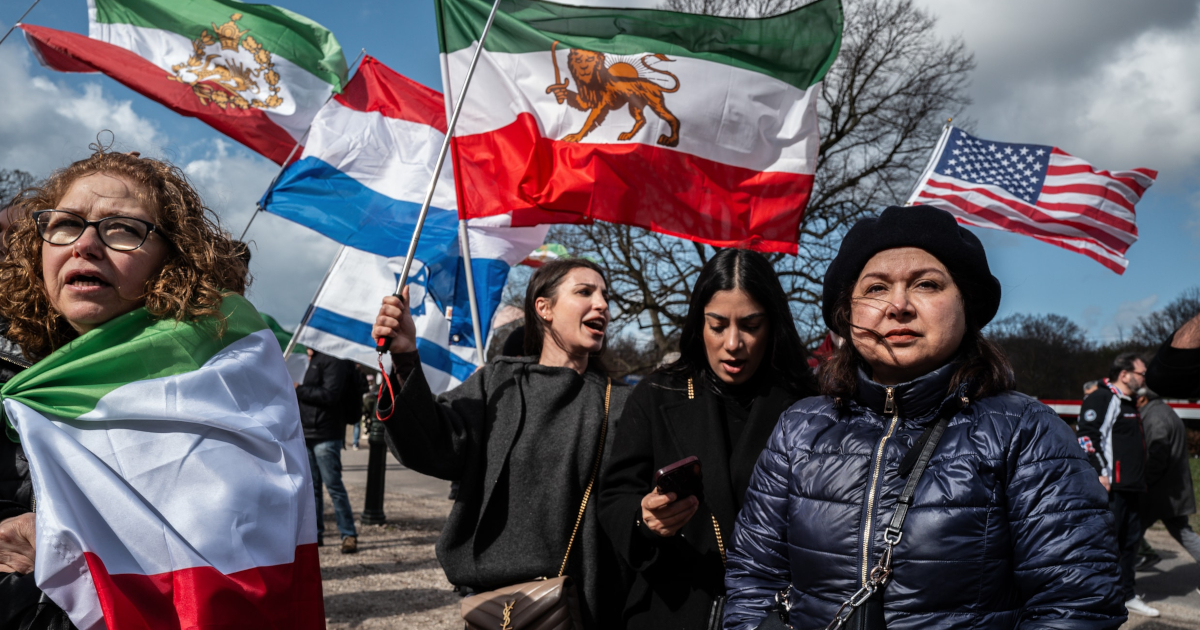
Security guards in times of threat: from festival grounds to office buildings

Source Photo’s: Google
For many security guards, a busy period is just around the corner. The festival and event season is about to start, which means extra shifts on top of regular duties for many of them. For some, this will be limited to a few additional shifts, while others will be working at festivals and events almost every weekend – as a side job or as full-time event security staff.
Security companies are already busy scheduling personnel. Duty rosters are filling up and the demand for experienced security officers is clearly increasing. This underlines how important solid preparation is, both operationally and mentally.
At the same time, there are global developments that cannot be ignored. Wars in different regions, political tensions between major powers and economic uncertainty are creating an unstable situation. Think, for example, of rising fuel prices and other crises that dominate the news on a daily basis. Even though many of these conflicts seem geographically far away, they still have a real impact on the security situation in Europe.
In early March 2026, Europol warned of an increased threat level within the European Union, partly due to rising tensions around Iran. Europol is the European Union’s law enforcement cooperation agency, supporting Member States in combating serious international crime and terrorism, and playing a key role in sharing criminal intelligence between countries. According to this warning, there is an increasing risk of terrorism, violent extremism, organised crime and cyberattacks within Europe.
The first signs of this threat have also become visible in the Netherlands. In March 2026, several attacks took place, including on a synagogue in Rotterdam, a Jewish school in Amsterdam and an office building in the Amsterdam Zuidas business district. The group that claimed responsibility for these attacks explicitly targets the European Union and demands that it distances itself from American and Zionist interests.
The various security and intelligence services are expected to be working intensively on investigating this group and mapping out potential new threats. In doing so, they are not only looking at direct attacks, but also at broader risks arising from the current geopolitical situation.
This is not the first time that international tensions have had an impact on the Netherlands. In 2015 and 2017, assassinations took place which, after investigation, turned out to have been carried out by Dutch criminals acting on behalf of the Iranian authorities. This shows how international conflicts can translate into very concrete threats within our national borders.
On 19 March of this year, another Iranian national was shot. The investigation is still ongoing, but a suspect has already been arrested in Germany. Whether and how this incident is linked to the broader tensions will have to be determined by further investigation.
The situation in the Middle East is not the only factor influencing security in the Netherlands. Right-wing extremism, eco-activism and anti-institutional extremism – including the so-called “sovereign citizens” – are also playing an increasingly important role in the Dutch threat landscape. More information about these movements and the current threat assessment can be found in the Terrorist Threat Assessment for the Netherlands (DTN) published by the NCTV.
We can assume that the various government bodies responsible for our security are well aware of the current tensions and threats. They continuously monitor developments at home and abroad and translate these into an up-to-date threat level for the Netherlands. However, this does not mean they can see everything or prevent every action. The attacks that still took place in early March illustrate this painfully.
For security guards, the start of the new festival and event season is approaching at the same time as new challenges are emerging due to the current global situation. At a time when the threat level is substantial (level 4: there is a real chance of a terrorist attack in or against the Netherlands), what looks like a normal shift can suddenly become crucial for the safety of a site or event.
A security guard who wants to stay truly professional in this environment needs to work more consciously in three key areas: understanding the current threat, observing and acting much more sharply, and cooperating and reporting in a professional way.
In the next part of this blog, I will break these three areas down into practical tips and points of attention. Do not see them as theory for the bookshelf, but as concrete tools you can apply during your next shift. Use them to take a critical look at your own way of working: what are you already doing well, and where can you, as a security professional, become just that one step sharper.
1. Understand the current threat
- Follow the Terrorist Threat Assessment for the Netherlands (DTN) and translate the current level 4 (substantial: there is a real chance of a terrorist attack in or against the Netherlands) into your daily work: which locations, targets and scenarios are realistic at your posts?
- Stay aware of social and political developments by regularly following the news via newspapers, news websites and TV bulletins, and link relevant events and tensions to your own working environment.
- Know the main sources of threat: jihadist extremism, right-wing extremism, anti-institutional extremism (including sovereign citizens) and lone actors / individual perpetrators, and consider how these might manifest themselves at your location.
- Connect the international situation (wars, tensions in the Middle East, calls for attacks) to your own risk assessment, especially where large crowds are present, such as events, shopping centres and nightlife areas.
2. Refine observation and behavioural detection
- Train yourself to look at behaviour rather than focusing on appearance or background: pay attention to unexplained nervousness, unusual clothing or bags, inappropriate interest in security measures, routes or procedures.
- Practice with scenarios and case studies: “What would I do if this person suddenly walks away when they see the police?” or “What if someone is filming emergency exits and cameras in great detail?”
- Use simple mental checklists (who – what – where – why – how) to quickly assess whether behaviour fits the environment or stands out as unusual.
3. Ask the right questions when behaviour is suspicious
- Use open, calm questions to gather information without escalating the situation, for example: “Where exactly do you need to be?”, “Where have you come from?”, “Who are you meeting here?” instead of direct accusations.
- During the conversation, pay attention to inconsistencies (the story changes, no clear purpose, evasive answers) and combine this with your observations, not with gut feeling alone.
- Afterward, briefly document what was said, what you saw and which steps were taken, so that colleagues, the organisation and the police have a clear basis to work from.
4. Follow procedures – and dare to escalate
- Know the procedures: who to call and when, what the threshold is for calling the emergency number, what you report to the control room or your supervisor, and where the limits of your own authority lie.
- Practice internal escalation scenarios (suspicious package, bomb threat, aggressive extremist statements) so that under stress you no longer have to think about the basic steps.
- Make sure your basic knowledge of emergency and crisis procedures is up to date: evacuation, cordoning off areas, crowd management and providing information to the public.
5. Invest deliberately in knowledge and resilience
- Whenever possible, take targeted training courses on radicalisation, extremism and recognising terrorism-related indicators, and bring that knowledge back to your workplace – for example in the form of short toolbox talks or briefings.
- Keep working on your mental resilience as well: learning to cope with threat, media images and incidents, so that you can continue to act clearly under pressure.
- Actively seek cooperation with the police, organisers and fellow security officers: share signals, discuss doubts and learn from incidents and near-incidents.
In these points, I deliberately focus on topics linked to radicalization, extremism and terrorism, because – as described earlier in this blog – they are once again becoming more prominent due to the current global situation and the increased threat level.
However, the points above do not apply only to terrorism or politically motivated violence. They also help you as a security guard in many other situations where safety is at stake: from crime and disorderly conduct to someone trying to enter without a ticket, or a visitor who “only” has one ecstasy pill in their pocket. These are also risks that can affect the safety and reputation of an event or organization.
Many people automatically think of crowded places such as festivals, train stations or stadiums when they hear about an attack with a political or ideological motive. In practice, that is not always the case. The attack in March, in which an explosive device was placed at an office building, shows that an apparently “ordinary” location can also become a target, simply because of a company’s origin, identity or profile.
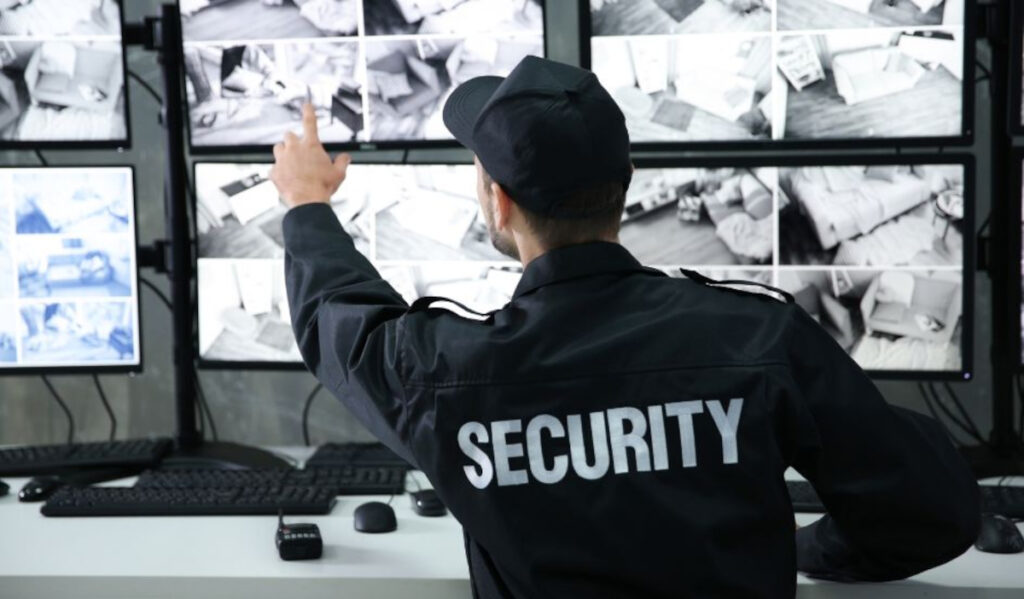
Safety can be at stake anywhere and in many different forms, and that is exactly why security guards are deployed so often. What is not always recognized – or at least not sufficiently acknowledged – by government and public authorities, is that security guards are often the real first line of defense when it comes to safety. Whether it is an office building where you notice something suspicious on CCTV or at reception, a festival where you find something during a pat-down search, or a patrol round where you detect suspicious activity around a premises: very often it is the security guard who first raises the alarm.
The knowledge and vigilance that you apply in your daily work as a security professional can make the difference between an incident and a prevented incident. That is precisely why, in this blog and in my role as a radicalization and terrorism expert, I want to provide you as a security guard with additional information and practical tools – so that, in line with the current situation in the world and the substantial threat level, you can perform your job even better and more consciously.
If, after reading this blog, you have any questions or would like to discuss a specific case, you can reach me via my website: www.rctapilaha.com. If you already have my phone number, you are of course also welcome to contact me directly.